
Dilated cardiomyopathy in molossers: symptoms, diagnosis and treatment
Author: Dr. Rosario Bergamín Published in: “CLUB ESPAÑOL DE LOS MOLOSOS DE ARENA” magazine Date: 2001 English translation: artificial intelligence Dr. Rosario Bergamín explains dilated cardiomyopathy in large dogs, especially molossers. The article describes its progressive nature, its possible genetic basis, the factors that may contribute to its development, its symptoms, diagnostic methods and treatment options. It also highlights the importance of periodic cardiac check-ups, especially before anesthesia or surgery, in order to detect the disease in early stages and improve survival.
By @a.myanimal
Cardiology: Dilated Cardiomyopathy in Molossers
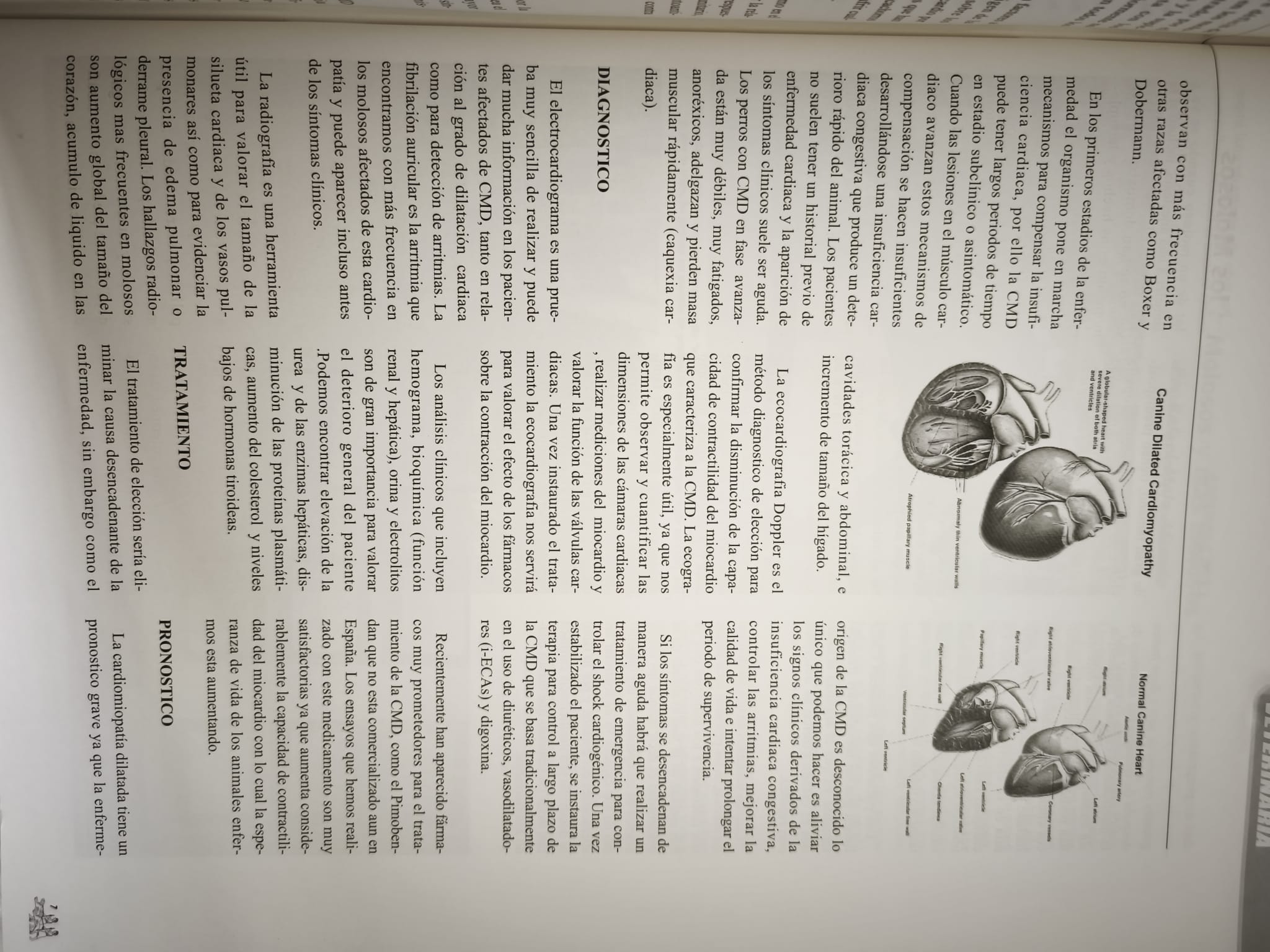
Dilated cardiomyopathy (DCM) is the most common cardiovascular disease in large dogs. This pathological process involves alteration of the structure and function of the myocardium, the cardiac muscle, which causes a serious failure in the heart’s ability to contract with each beat, in turn triggering a progressive and very marked dilation of the cardiac chambers.
This cardiovascular disease is not congenital; the animal does not have the disease at the time of birth. The myocardial alterations that produce DCM are acquired over time, and their exact origin is still not known. However, the fact that there are canine breeds especially predisposed to it suggests a genetic and hereditary component.
It is important to point out the difference between congenital disease and genetic disease. DCM is not a congenital disease because adult animals that suffer from this heart disease do not present any malformation in the heart at the time of birth. DCM is a genetic disease because the individuals that suffer from it are born with a greater predisposition to develop the disease than healthy individuals. DCM is a hereditary disease because it has been possible to demonstrate, in many canine breeds, the existence of family lines in which the percentage of affected animals is higher.
There is also a sex predisposition. Most studies indicate that the proportion of affected males is twice that of females, although in the most recent statistics the difference is not so marked.
DCM can appear at any age, but it is evident that, since it is an acquired heart disease, the risk of suffering from it increases with age. Most cases are diagnosed between two and five years of age.
Etiology
The etiology of DCM is idiopathic, which means that the exact causes that trigger the disease are not known, although there are different hypotheses that may explain the origin and development of this cardiomyopathy.
Deficiency or alteration in the metabolism of certain nutrients, especially some amino acids, components of proteins, such as taurine and carnitine, may contribute to the development of heart failure due to DCM. In Cocker Spaniels, one of the few medium-sized breeds predisposed to this disease, the relationship between the disease and taurine deficiency has been demonstrated, and in Boxers and Dobermanns there are studies on carnitine deficiency. However, in molossers these facts have not been demonstrated for the moment, and supplementation of the diet with the nutrients mentioned above does not produce clear improvement in all patients.
Viral agents are factors to be taken into account in the origin of DCM. There are studies on the damage caused to the myocardium by parvovirus. Animals that have suffered parvovirosis as puppies are more predisposed to suffer any type of cardiomyopathy.
Both in humans and in dogs, it has been possible to demonstrate the relationship of this disease with abnormal responses of the immune system, that is, the production of specific circulating antibodies against the myocardium.
Symptomatology
The clinical picture caused by DCM varies depending on which side of the heart undergoes greater dilation, and this explains why the symptoms observed are not the same in all canine breeds.
Molossers affected by DCM more frequently present conditions with predominance of right-sided heart failure, characterized by ascites, accumulation of free fluid in the abdominal cavity, hepatic congestion, dilated jugular veins, weak pulse, pale mucous membranes and cold extremities due to poor peripheral circulation, etc. Syncope and sudden death are signs of DCM with predominance of left-sided heart failure, which are observed more frequently in other affected breeds such as Boxers and Dobermanns.
In the early stages of the disease, the organism activates mechanisms to compensate for heart failure; therefore, DCM may remain for long periods in a subclinical or asymptomatic stage. When the lesions in the cardiac muscle progress, these compensation mechanisms become insufficient, leading to congestive heart failure that causes rapid deterioration of the animal. Patients usually have no previous history of heart disease, and the appearance of clinical symptoms is usually acute. Dogs with advanced DCM are very weak, very tired, anorexic, lose weight and rapidly lose muscle mass, cardiac cachexia.
Diagnosis
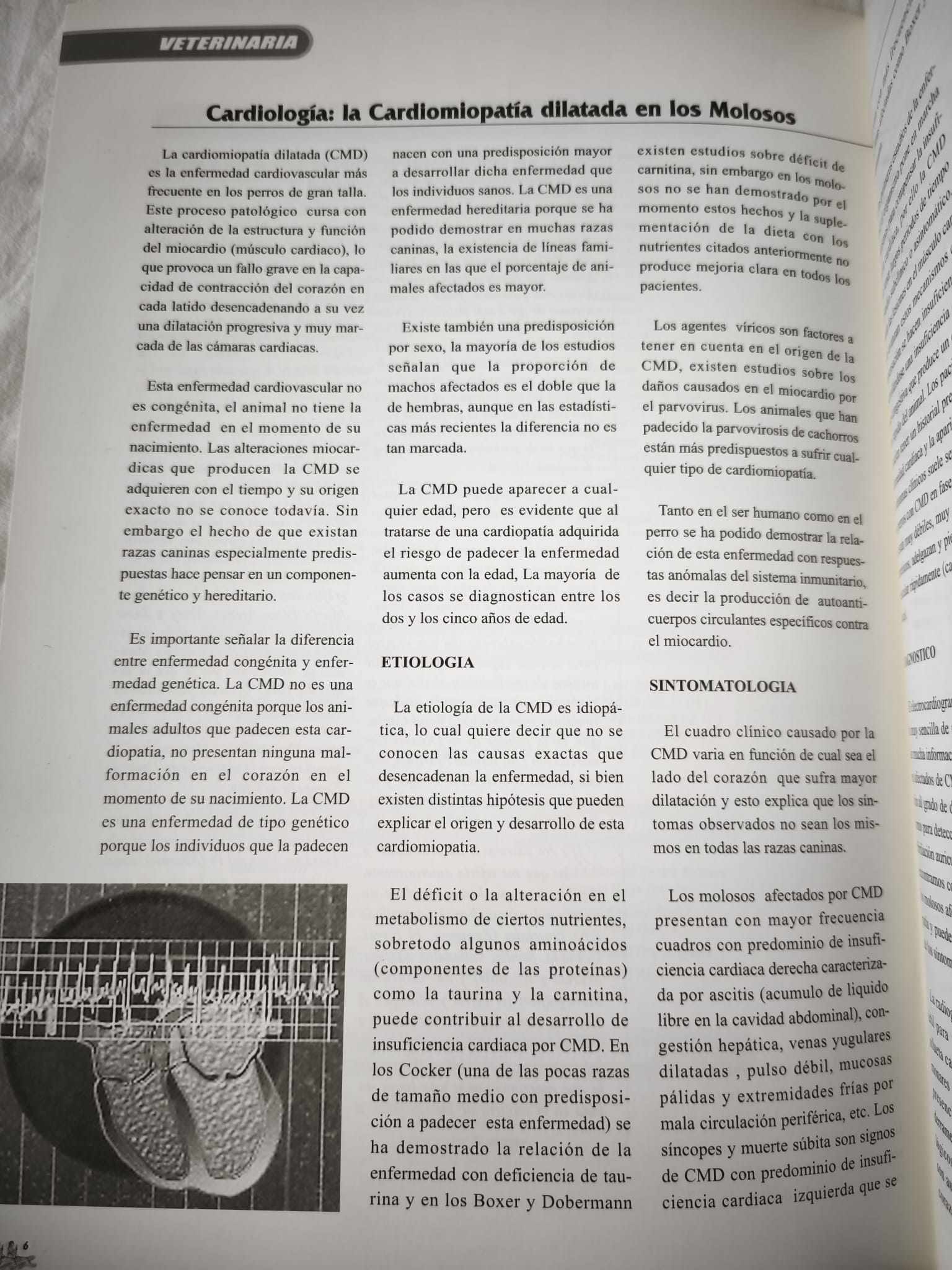
The electrocardiogram is a very simple test to perform and can provide a great deal of information in patients affected by DCM, both in relation to the degree of cardiac dilation and for the detection of arrhythmias. Atrial fibrillation is the arrhythmia we find most frequently in molossers affected by this cardiopathy, and it may appear even before clinical symptoms.
Radiography is a useful tool for assessing the size of the cardiac silhouette and pulmonary vessels, as well as for showing the presence of pulmonary edema or pleural effusion. The most frequent radiological findings in molossers are global enlargement of the heart, accumulation of fluid in the thoracic and abdominal cavities, and enlargement of the liver.
Doppler echocardiography is the diagnostic method of choice to confirm the decrease in the contractile capacity of the myocardium that characterizes DCM. Ultrasound is especially useful, since it allows us to observe and quantify the dimensions of the cardiac chambers, take myocardial measurements and assess the function of the cardiac valves. Once treatment has been established, echocardiography will help us assess the effect of the drugs on myocardial contraction.
Clinical tests including blood count, biochemistry, renal and hepatic function, urine and electrolytes are of great importance in assessing the patient’s general deterioration. We may find elevation of urea and liver enzymes, decreased plasma proteins, increased cholesterol and low levels of thyroid hormones.
Treatment
The treatment of choice would be to eliminate the triggering cause of the disease; however, since the origin of DCM is unknown, the only thing we can do is relieve the clinical signs derived from congestive heart failure, control arrhythmias, improve quality of life and try to prolong the survival period.
If symptoms appear acutely, emergency treatment will be necessary to control cardiogenic shock. Once the patient has been stabilized, long-term control therapy for DCM is established, traditionally based on the use of diuretics, vasodilators, ACE inhibitors, and digoxin.
Recently, very promising drugs have appeared for the treatment of DCM, such as Pimobendan, which is not yet marketed in Spain. The trials we have carried out with this medication have been very satisfactory, and it considerably increases the contractile capacity of the myocardium, with the result that the life expectancy of sick animals is increasing.
Prognosis
Dilated cardiomyopathy has a serious prognosis because the disease is progressive and terminal. Most patients of large breeds die six to twelve months after the onset of symptoms of congestive heart failure. However, these same patients may have remained clinically asymptomatic for several years, even while already suffering from some arrhythmia on their electrocardiogram. In any case, before issuing a definitive prognosis, it is essential to assess the individual response to initial medical treatment.
Patients suffering from DCM must be reevaluated frequently, since on some occasions the clinical condition deteriorates rapidly.
When we speak of such high mortality in the first twelve months, we refer to animals that have already entered the advanced phase of the disease, that is, when the body’s compensation mechanisms are no longer able to control the alterations of the heart and, therefore, heart failure develops with all the symptoms mentioned above.
Conclusions
Molossers, as large canine breeds, are predisposed to suffer dilated cardiomyopathy. For this reason, it is highly advisable to carry out periodic cardiac check-ups, especially in order to try to diagnose the disease in the early stages, when the animal remains clinically asymptomatic. A simple auscultation and an electrocardiogram can help us make an early diagnosis that in turn allows us to establish treatment before myocardial lesions become very serious, and thus prolong survival.
Animals that have suffered parvovirosis or shock situations such as gastric torsion, heat stroke or acute pancreatitis, as well as dogs with hypothyroidism or those with a family history of DCM, should undergo more rigorous check-ups, since these situations may have caused previous damage to the myocardium that could later trigger cardiomyopathy.
For all these reasons, it is vitally important to assess the cardiovascular function of a molosser when it is going to undergo anesthesia, even if it is for routine procedures in young or healthy animals, as well as to calculate anesthetic doses according to the exact weight of the animal and its body surface area, to monitor the patient during surgery and during recovery, and of course to choose the anesthetic protocol with the lowest risk for these animals.
Dr. Rosario Bergamín
Frequently asked questions
What is dilated cardiomyopathy (DCM) in dogs?
Dilated cardiomyopathy (DCM) is the most common cardiovascular disease in large dogs, involving structural and functional changes in the heart muscle that lead to chamber dilation and impaired contraction.
Is DCM a congenital disease in dogs?
No, DCM is not a congenital disease. While dogs may be born with a genetic predisposition, the myocardial alterations that cause DCM are acquired over time.
What are the symptoms of DCM in molossers?
In molossers, DCM often presents with right-sided heart failure symptoms like ascites, hepatic congestion, and weak pulse. Left-sided failure can cause syncope and sudden death. Early stages may be asymptomatic.
How is DCM diagnosed in dogs?
Diagnosis involves electrocardiograms (ECG) for arrhythmias, radiography to assess heart size and fluid accumulation, and Doppler echocardiography to evaluate myocardial contractility. Blood tests are also important.
What is the prognosis for dogs with DCM?
DCM has a serious, progressive prognosis. Most large breed dogs die within six to twelve months after congestive heart failure symptoms appear, though early diagnosis and treatment can prolong survival.
Related articles
Colors in the Fila Brasileiro, July 1993
Published in: “Club Español de los Molosos de Arena” Date: July 1993 English translation: artificial intelligence The article addresses the controversy surrounding accepted colors in the Fila Brasileiro and defends the CAFIB position regarding the rejection of black as a correct color in the breed. Mar Olivas Tur argues that other colors and combinations, such as white, brindle, sand and cinza champagne, are part of the history and authenticity of the Fila. The text insists that the quality of a specimen should not be judged exclusively by the color of its coat, but by its correctness, typicity and racial value.
Tosa-Inu: the noble samurai
Author/commentary: D. Javier Sánchez Fernández, international judge Published in: “CLUB ESPAÑOL DE LOS MOLOSOS DE ARENA” magazine Date: 2000 English translation: artificial intelligence D. Javier Sánchez Fernández analyzes the Tosa-Inu from his experience as an international judge and expert on Japanese breeds. The article addresses the cultural value of the Tosa in Japan, its relationship with samurai tradition, its character as a ceremonial fighting dog, the difficulty of accessing authentic specimens outside Japan, and the risks of losing typicity when the breed is interpreted through Western show criteria. The importance of head, expression, mobility, temperament and preservation of racial identity is also emphasized.
The ideal age to breed the male and female Fila Brasileiro, April 1994
Author: Paulo Santos Cruz The article analyzes the reasons why CAFIB established restrictive rules regarding the minimum breeding age and the rest periods between litters in the Fila Brasileiro. Paulo Santos Cruz argues that sexual maturity is not the same as full physical maturity, especially in large and molossoid breeds. The author explains that breeding males and females too early can harm the health of the dogs, weaken selection, and compromise the quality of the breed. The article was published by Paulo Santos Cruz in the magazine “CLUB ESPAÑOL DE LOS MOLOSOS DE ARENA” in April 1994 and translated by artificial intelligence.
Colors in the Molosos de Arena, September 1994
Author: Gilbert de Mulder Published in: “Club Español de los Molosos de Arena” Date: September 1994 English translation: artificial intelligence The article introduces a series dedicated to the genetics of coat color in the breeds grouped as Molosos de Arena. Gilbert de Mulder explains the basic functioning of genes and alleles related to coat color, focusing especially on the “S” locus and its influence on the appearance of white markings. The text analyzes specific cases in the Mastiff, Bullmastiff, Neapolitan Mastiff, Dogue de Bordeaux and Fila Brasileiro, defending the importance of studying pedigrees and breeding lines in order to avoid undesirable genetic combinations.
Dysplasia in the Dogue de Bordeaux, September 1994
Author: Dr. Fontaine Published in: “Club Español de los Molosos de Arena” Date: September 1994 Lecture: Saturday, 6/11/93 Spanish translation: P. Llorca English translation: artificial intelligence The article records a lecture by Dr. Fontaine on dysplasia in the Dogue de Bordeaux. The text addresses hereditary, environmental, nutritional and exercise-related factors that may influence the appearance or worsening of dysplasia. It also explains the importance of radiography, correct positioning of the dog, the first hip-reading statistics in the breed and the need to carry out controls before using dogs for breeding.
Round table around judge Bill Warren
Author: Begoña Pascua Interviewee: Bill Warren Published in: 2000 English translation: artificial intelligence The article records a round table with judge Bill Warren about the Bullmastiff. Through questions and answers, it discusses key aspects of the breed such as bite, prognathism, mask, ears, bone, movement, dysplasia, temperament, family breeding versus large-kennel breeding, and the difference between English and American lines. The text stresses the importance of always judging the dog as a whole, preserving breed type and breeding with common sense.